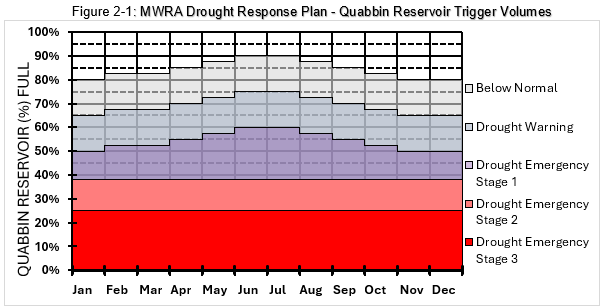
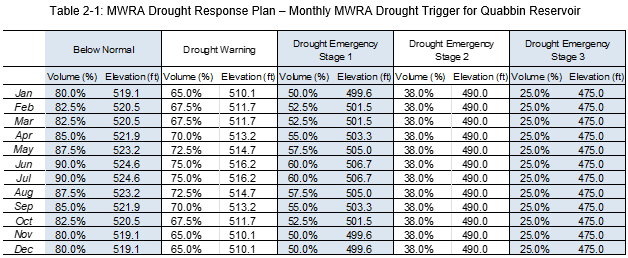
The MWRA Drought Response Plan defines drought stages based on the percentage of Quabbin Reservoir storage volume percentage full (see Figure 2-1 and Table 2-1). Expected water levels vary by time of year, reflecting the reservoir’s seasonal fill and drawdown cycles. The Quabbin Reservoir’s elevation is reviewed on the first of each month to determine the drought trigger stage.
The overall objective is to optimize and conserve water consumption. Conservation response actions, triggered within each drought stage, are organized into five categories:
| Conservation Response Actions | |
|---|---|
| 1. Analysis & Planning | Assess drought conditions and potential impacts. |
| 2. Coordination | Engage with stakeholders, agencies, and municipalities. |
| 3. Public Outreach | Communicate water conservation measures and expectations. |
| 4. Technical Assistance | Provide guidance and support to MWRA communities. |
| 5. Operational Adjustments | Implement system-wide measures to optimize water use. |
The elevation trigger indicated above initiates these conservation response actions. The MWRA Drought Response Plan emphasizes timely forecasting of drought impacts, enabling timely and progressive public conservation actions to influence water withdrawal behavior.
The MWRA works with and provides technical support to the water system community managers within its service area to implement end-user water conservation and restrictions in response to drought conditions. The success of this approach relies on the already well-established patterns of coordination and cooperation between MWRA and its member communities, as well as ongoing public education and engagement campaigns to reduce water consumption.