
About this Project
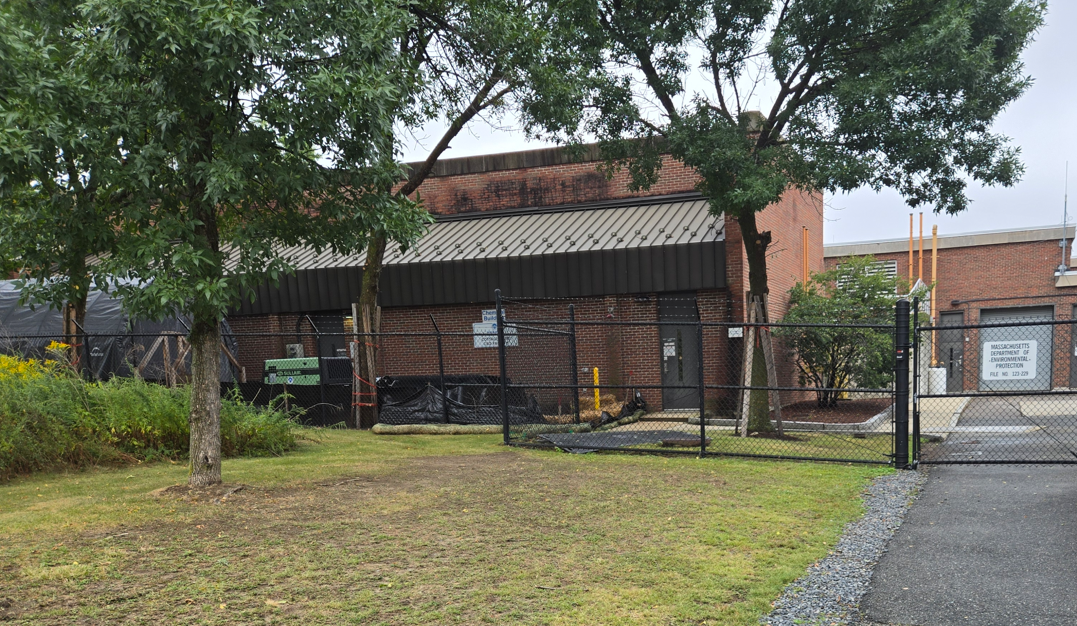
The Massachusetts Water Resources Authority (MWRA) operates the Cottage Farm Combined Sewer Overflow (CSO) Facility located at 660 Memorial Drive in the City of Cambridge (near Magazine Beach). The CSO facility serves as a critical piece of regional infrastructure by protecting public health, preventing urban flooding, and maintaining the water quality of the Charles River Basin.
Combined sewers carry flows from both rainwater and wastewater from homes, businesses, and other properties within the same network of subsurface pipes. During normal environmental conditions, flows are delivered to treatment plants, such as the MWRA’s Deer Island Wastewater Treatment Plant. However, during heavy rain events, when flows can double or triple in volume, these combined sewer systems can become inundated. In order to prevent damage to the system, the combined sewers have built-in overflows that act as relief points by releasing excess flows into the nearest body of water.
Importantly, CSOs prevent sewage backups from occurring in homes and onto area streets, but the discharges can impact water quality. Should a discharge occur at the Cottage Farm CSO Facility, the flow is treated beforehand. This includes screening, disinfection, and dechlorination of the discharge materials.
After several years of service, the facility is in need of significant updates and repairs, some of which are required by the United States Environmental Protection Agency (EPA), to effectively operate well into the future. In order to do so, several projects will commence over the next several years to fully update the facility. These projects include the replacement of sodium hypochlorite tanks, PCB abatement work within the facility, the replacement of exhaust silencers and stacks, and the replacement of fuel tanks. The MWRA anticipates the first of the projects to begin in late October 2026. Additionally, the MWRA will continue to work with the Department of Conservation and Recreation (DCR), the City of Cambridge, and key stakeholders as these projects progress.
Summary and Schedule of Work
- Sodium Hypochlorite Tanks Replacement Emergency Work
- Construction Timeline: 10 days between late October 2026 – April 2027
- This project will replace two sodium hypochlorite tanks at the Cottage Farm CSO Facility. A portion of the roof will be removed at the chemical building, and a crane will be utilized to remove and replace the existing tanks. The crane is planned to be stationed on the west side of the Chemical Building during this work. The crane work is anticipated to be onsite for 10 non-consecutive days over the 5-month period.
- Facility PCB Abatement (Phase 1 & 2)
- Construction Timeline Phase 1: January 2027 – November 2028
- Construction Timeline Phase 2: July 2030 – July 2033
- Per an EPA agreement, a polychlorinated biphenyls (PCBs) abatement plan was developed to address PCBs and to complete a full rehabilitation of the interior of the facility. Phase 1 will focus on the encapsulation and abatement of accessible PCB contaminated materials (approximately 80% to 90% abatement) in the Main Building.
- The remaining PCB abatement (10% to 20% of PCB contaminated materials) will occur during Phase 2. Phase 2 will also include a complete facility rehabilitation replacing major process/mechanical and electrical equipment and architectural components of the facility.
- Exhaust Silencer and Stack Replacement
- Construction Timeline: November 2027 – December 2027
- This project will replace three diesel engine exhaust silencers and stacks for the diesel-powered pumps, including the supporting structures. (No laydown area is currently anticipated outside of MWRA’s existing fencing).
- Fuel Tank Replacement
- Construction Timeline: April 2029 – April 2030
- This project includes the removal, disposal, and replacement of two underground fuel storage tanks, piping connections, fuel transfer systems, upgraded leak detection, and tank monitoring systems. Work will be completed both inside and outside of the facility.
Laydown Area
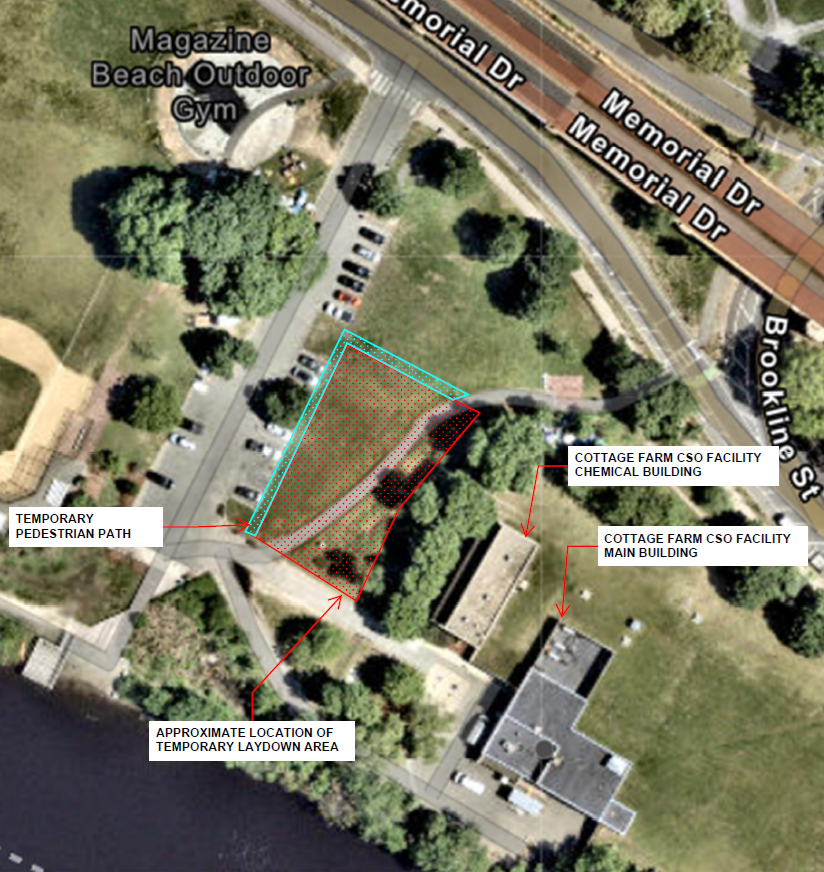
A small area to support a crane and laydown area will be needed for approximately 10-days between October 2026 and April 2027 to the west of the Chemical Building to support the first project (Sodium Hypochlorite Tank Replacement). This will immediately be followed by Phase 1 PCB Abatement, requiring the same temporary laydown area. While this project is underway, the laydown area will be secured and fenced off, and a temporary pedestrian walkway will be installed to enable safe access through the area. Appropriate signage will be stationed at both entrances to help direct pedestrians, as well. Trees within the laydown area will be protected. Temporary erosion control measures will be set in place around the laydown area. Permanent impacts on wetland resource areas are not anticipated. Once work has been completed, a drought resistant grass seed mix will be used to restore this location of the park to better than the current condition.
Please note, updates for laydown areas for the remaining projects will be provided as this information becomes available over the next few years.
Public Impacts
Public use of the ballfields and exercise equipment will not be impacted by the projects and will remain fully available. Impacts on the public while the projects are underway are expected to be minor. These impacts include:
- The current pedestrian walkway to the left of the facility will be temporarily relocated to enable safe access through the area (appropriate signage will be stationed at both entrances to help direct pedestrians).
- Once work has been completed, a drought resistant grass seed mix will be used to restore this location of the park better than the current condition.
- Existing interpretive signage located on the south side of the laydown area will be temporarily removed during construction and reinstalled at its original location following the completion of the projects.