MWRA home


Boston Harbor and Massachusetts Bay
MWRA Environmental Quality Department


Massachusetts Bay

MORE INFORMATION
Outfall Monitoring Overview
Ambient Monitoring Program
Useful Links
Literature List
Outfall Papers (abstracts)

Now that the Boston Harbor Project has ended, there is little doubt that the upgraded sewage treatment system has benefited the marine environment.

BAY WATER QUALITY
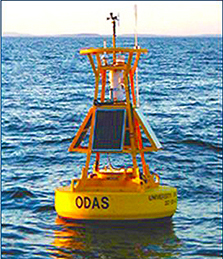
Buoy collecting hourly data off Cape Ann Link to instrument location in Stellwagen Bank Link to Cape Ann instrument location
Water quality is measured at:
Cape Ann locationCape Ann near the outfall, and Stellwagen Bank locationStellwagen Bank. (click for live data)

A major part of the project: to stop discharging treated wastewater (effluent) into Boston Harbor. Instead, an underground outfall tunnel carries effluent from MWRA communities out into Massachusetts Bay.

When MWRA began discharging into the Bay, a water quality monitoring program was implemented to assess any effects of treated sewage on the Bay. The Ambient Monitoring Program has enabled MWRA to better understand the natural variability in the Bay's water quality. Monitoring has shown that the water near the outfall and throughout Massachusetts and Cape Cod bays is heavily influence by river inflows, weather, and other physical factors.

Data from 2008 continue to confirm that there are some detectable effects of the discharge near the outfall, such as increased ammonium. However, there are no detectable adverse effects at stations away from the outfall. Dissolved oxygen levels in bottom waters near the outfall have not changed and remain within state water quality guidelines.

MWRA's goals for Boston Harbor and Massachusetts Bay are based on concerns expressed by the public during the planning of the Boston Harbor Project. These goals include clean beaches, healthy marine resources, seafood safe for eating, and protection of the natural beauty of the harbor and the bay.

MONITORING DATA
The annual Outfall Monitoring Overview contains monitoring data from Massachusetts Bay. Over the years, monitoring has revealed that:
The quality of the effluent (treated wastewater) has improved, due to better control of pollution sources.
Chlorophyll, plankton, and dissolved oxygen levels are normal.
Concentrations of contaminants in sediment samples near the outfall are low and do not vary much. Pictures of sediments near the outfall show healthy, normal communities.